

Impact Stories
Personal stories, studies and blogs about our comfort companions
Do you have a story to tell about your plush Maltese companion? Please send it (anonymized for patient privacy) to us at machikonoishi@gmail.com. Please do NOT include any information that could be used to identify a patient including name. Nick names are fine.
Personal Stories
-
As a caregiver, for a senior Japanese woman, I witnessed firsthand how attached a patient can become to the little stuffed dog. She even slept with it at night, and it truly made her calmer and happier when she could sit and stroke the dog’s fur.
❋ TJ – Caregiver
-
This plush companion is for my father, who has end-stage Alzheimer’s and is in hospice care. He always loved animals—especially dogs—and had a small white dog when he was young. I know this will bring him comfort.
❋ Family member and caregiver
-
I’m a hospice nurse and some patients have no family or they don’t come to visit and just need a gentle touch or someone to talk to. Thanks for providing this to individuals going through their last journey.
❋ NB - Hospice Nurse
-
It is wonderful to be able to offer these items to our patients, and the interactions have been a positive addition to the volunteer visits.
❋ JS - Hospice Volunteer
The Human Touch
In moments of serious illness, small sensory experiences can matter deeply. A soft object to hold, something familiar to touch, can stay breathing, ease anxiety, and offer reassurance when words are no longer enough. The science helps explain why this happens - but the comfort itself is simple and human.
The Proven Power of Plush
The Science of Comfort
Shown below are references to research about the benefits to patients of comfort objects or plush companions as they relate to adult hospice or end-of-life and serious illness contexts (especially advanced dementia, which overlaps with hospice care). Some of these directly involve holding/cuddling plush dolls; others support the underlying mechanisms (emotion regulation, comfort, reduced distress) that justify their use in adult hospice settings.
❋ RESEARCHComforting objects such as stuffed animals reduce patient agitation
Study: Nonpharmacological Interventions in Hospice Care (Includes Contact Comfort with Plush Object)
Citation: Smith TJ, Alvariza A. A Pilot Study of Nonpharmacological Interventions for Hospice Patients With Behavioral and Psychological Symptoms of Dementia. J Hosp Palliat Nurs. 2020;22(6):487–495.
❋ RESEARCHStudy: Transitional Objects and Emotional Regulation in Adults (Physiological/Emotion Research)
Citation: Ko C-H. Exploring the Relationship Between Transitional Object Attachment and Emotion Regulation in Adults. Brain Sci. 2024. PMID:39791646.
Physically interacting with a plush toy can ease distress in hospice patients.
❋ RESEARCHCaregiver-focused interventions can improve emotional well-being, reduce distress, strengthen coping, and support quality of life for both patients and families during serious illness and end-of-life care.
Study: Interventions for Family Caregivers of Patients Receiving Palliative and End-of-Life Care (Systematic Review)
Citation: Dionne-Odom JN, Taylor RA, Frost J, et al. Interventions for family caregivers of patients receiving palliative and end-of-life care: A systematic review. J Palliat Med. 2023;26(12):1780-1795. PMID: 37943621.
❋ RESEARCHDoll therapy (providing a lifelike doll) reduces agitation, dysphoria, apathy, and caregiver burden.
Study: Doll Therapy in Older Adults with Advanced Dementia (RCT; supports emotional benefit
Citation: Santagata F, Massaia M, D'Amelio P. The doll therapy as a first line treatment for behavioral and psychologic symptoms of dementia in nursing home residents: a randomized, controlled study. BMC Geriatr. 2021;21:545. doi:10.1186/s12877-021-02496-0.
❋ RESEARCHHolding a plush toy reduces anxiety and physiological stress response and lowers cortisol levels.
Study: How Cuddly Comfort Object May Help Adults with Anxiety
Citation: Haynes A, Lywood A. How Cuddly Comfort Objects May Help Adults with Anxiety. Time Edge. 2022.
❋ RESEARCHStudy: Doll Therapy Meta-Analysis (Emotional Outcomes in Advanced Dementia)
Citation: Martín-García A, et al. Effect of Doll Therapy in Behavioral and Psychological Symptoms of People With Dementia: A Systematic Review. Healthcare. 2022;10(3):421. doi:10.3390/healthcare10030421.
Doll therapy improves emotional state and reduces disruptive behavior in dementia patients enrolled in palliative or hospice care.
❋ RESEARCHThe importance of non-curative interventions focused on comfort and patient-centered care.
Study: Hospice Care and Quality of Life in Patients with Advanced Illness
Citation: Liu P, et al. "The Impact of Hospice Care on the Prognosis, Quality of Life and Emotional Well-Being of Patients with Advanced Illness." Published in the Journal of Hospice & Palliative Nursing (December 2024). [1, 2, 3]
Blog - Founder’s Reflections
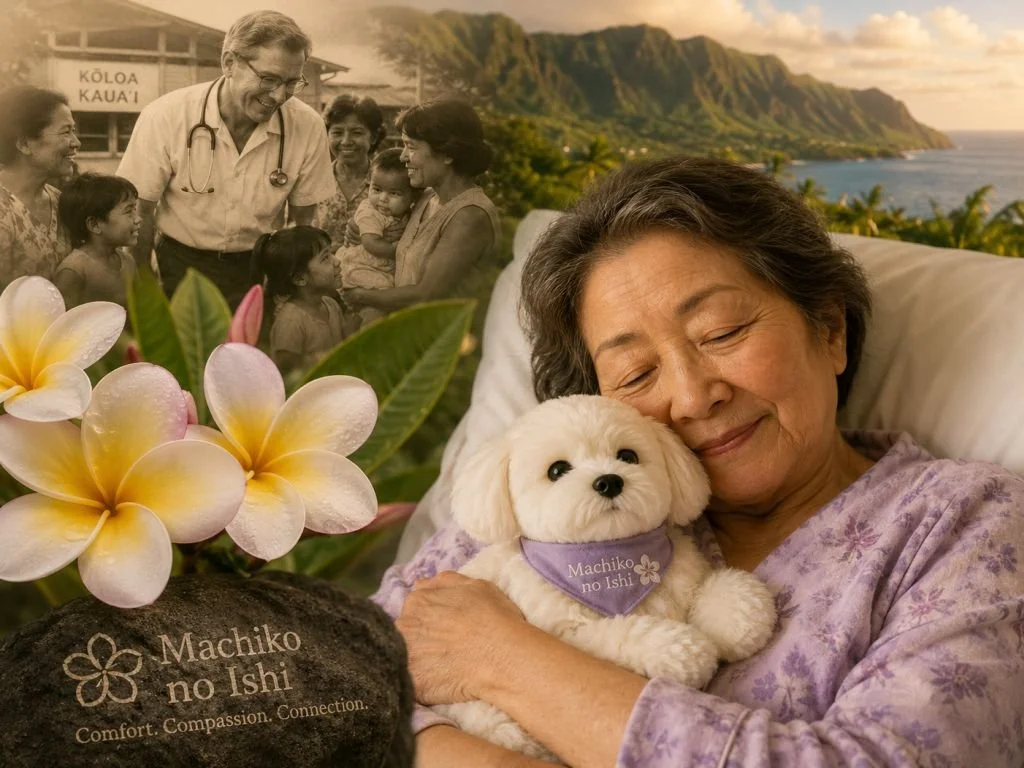
A Circle of Care
Every nonprofit has an origin story.
Most people assume the story of Machiko no Ishi begins in a hospice room in Southern California. In some ways, it does. But not really.
Extending Our Reach
Not surprisingly, one of the first objectives for a new, small charity like Machiko no Ishi is establishing awareness of what we do among those we hope to serve.

The People That I’ve Met
Machiko no Ishi has been operating for only about six weeks, but already this small charity has introduced me to some extraordinary people.
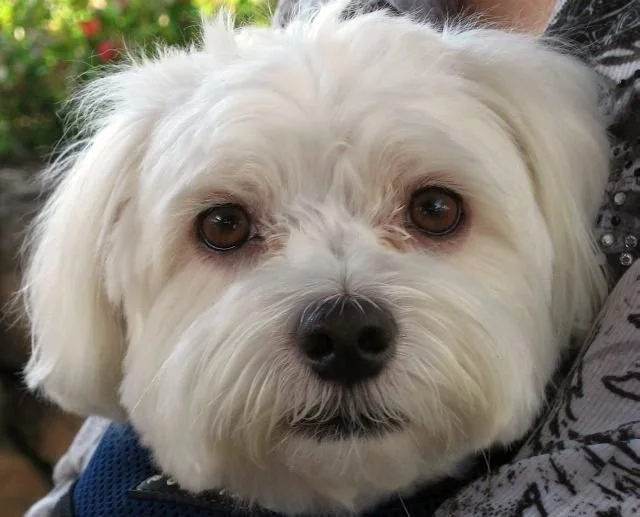
Why a Maltese?
From time to time, people ask me why Machiko no Ishi donates plush Maltese dogs.

Small, Personal, Human — and Effective
Machiko no Ishi was never meant to become a large organization.